Journal
After GLP 1 weight loss: what your jawline may be showing now
A shape explainer on how the jawline and lower face can look after GLP 1 weight loss, with one model's front and side views.
 Megan Fairchild
This is a shape explainer, not medical advice. Weight loss of any kind, including loss supported by GLP 1 medicines, changes the volume under the skin of the face. Fat in the cheeks, the jowl area and under the chin can reduce, and the structure beneath becomes easier to see.
For some faces the result is a cleaner jawline. For others it is a hollow under the cheekbone, a looser line along the jaw, or a neck that looks different from the face. The outcome depends on bone shape, skin quality and how quickly the change happened. Our model shows the starting point, an oval face with a soft jaw.
Three lines to read on your own photo
The first line is the lower border of the jaw, from the chin to the angle below the ear. After weight loss it can look sharper, or it can look interrupted by a small fold of skin. The second line is the cheek, where fullness may have moved or flattened. The third is the neck, where the angle between chin and throat is defined.
None of these needs measuring. A front photograph and a side photograph at eye height, in even light, are enough to see them. Look at where the jaw line is continuous, where it breaks, and where the shadow falls under the chin. Those are the places a clinician would also look first.
A fourth observation concerns the chin itself. When the soft tissue reduces, a chin that was previously hidden may look smaller or more recessed than before, or a strong chin may look more prominent. That is a change in how the bone reads, and not a change in the bone.
The jawline in two views
In the original side view, our model has a nose with a strong bridge and a chin that sits close to the line of the lips. The jaw line is soft and continuous, with a gentle angle under the ear. It does not point to any problem. It is simply a soft contour.
If she wanted a cleaner edge along the lower jaw, the change that a clinician might discuss is a more defined jaw angle and a clearer border beneath the chin. The simulation applies that and nothing else, so the nose, eyes and hair remain as they are.
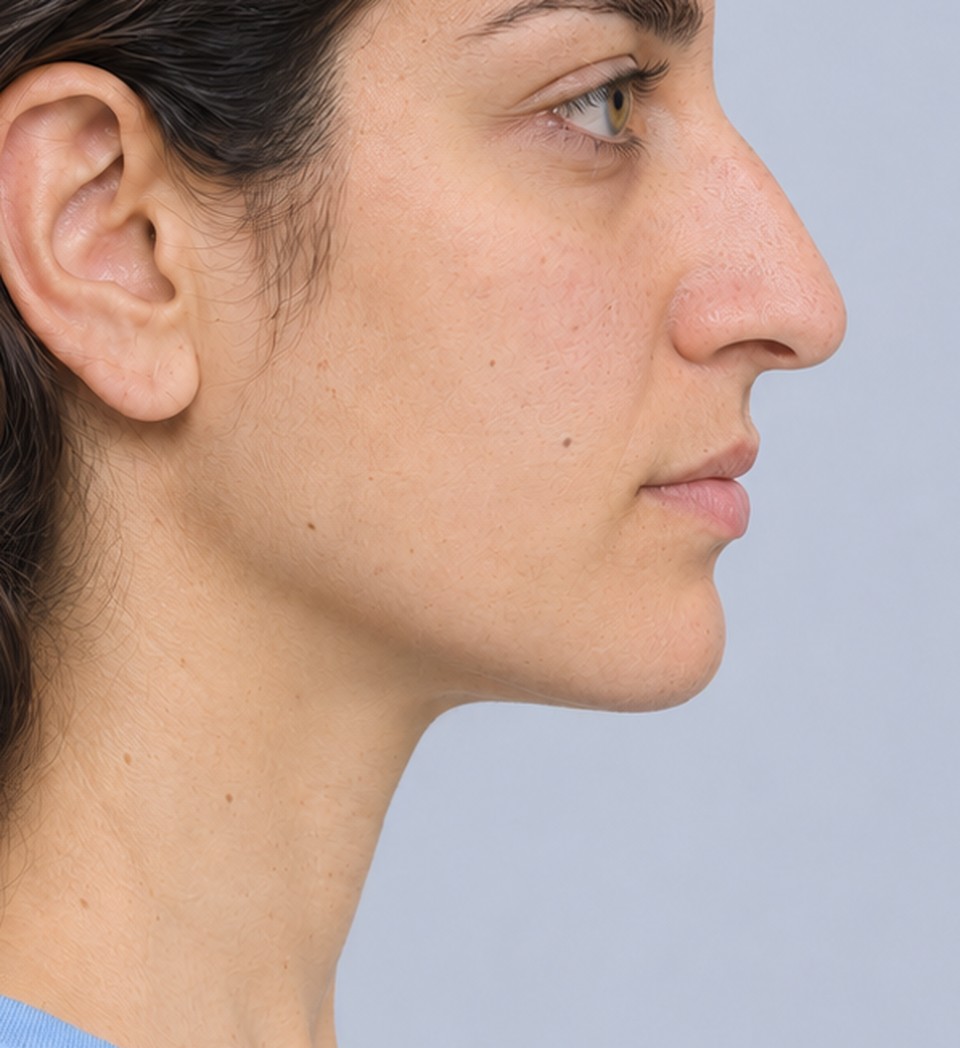
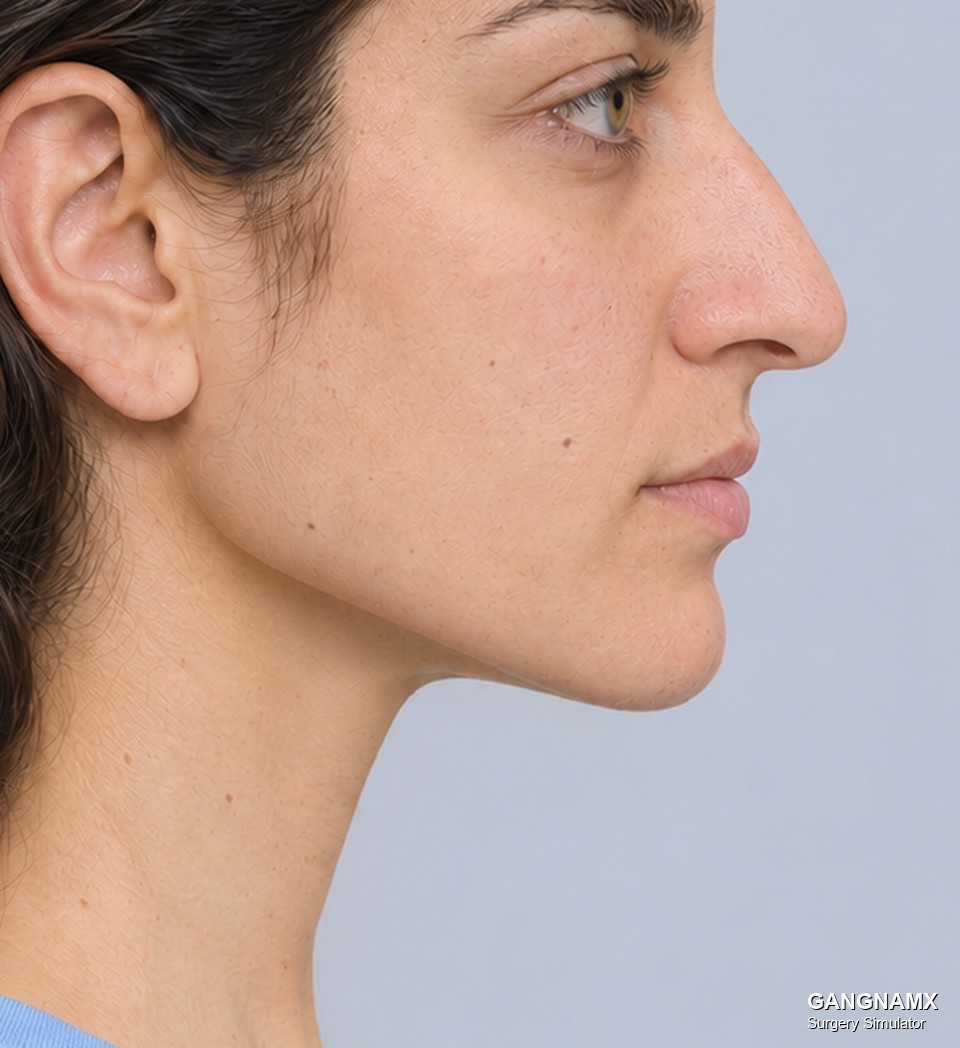
The simulated side view shows a clearly sharper lower border, a firmer chin line and a crisper angle where the jaw meets the neck. The change is easy to see and can still be described in a sentence. That sentence is what makes a consultation productive.
The front view shows the same change from a different direction. Here the question is whether the lower third of the face reads as even on both sides, and whether the jaw tapers toward the chin or stays wide.
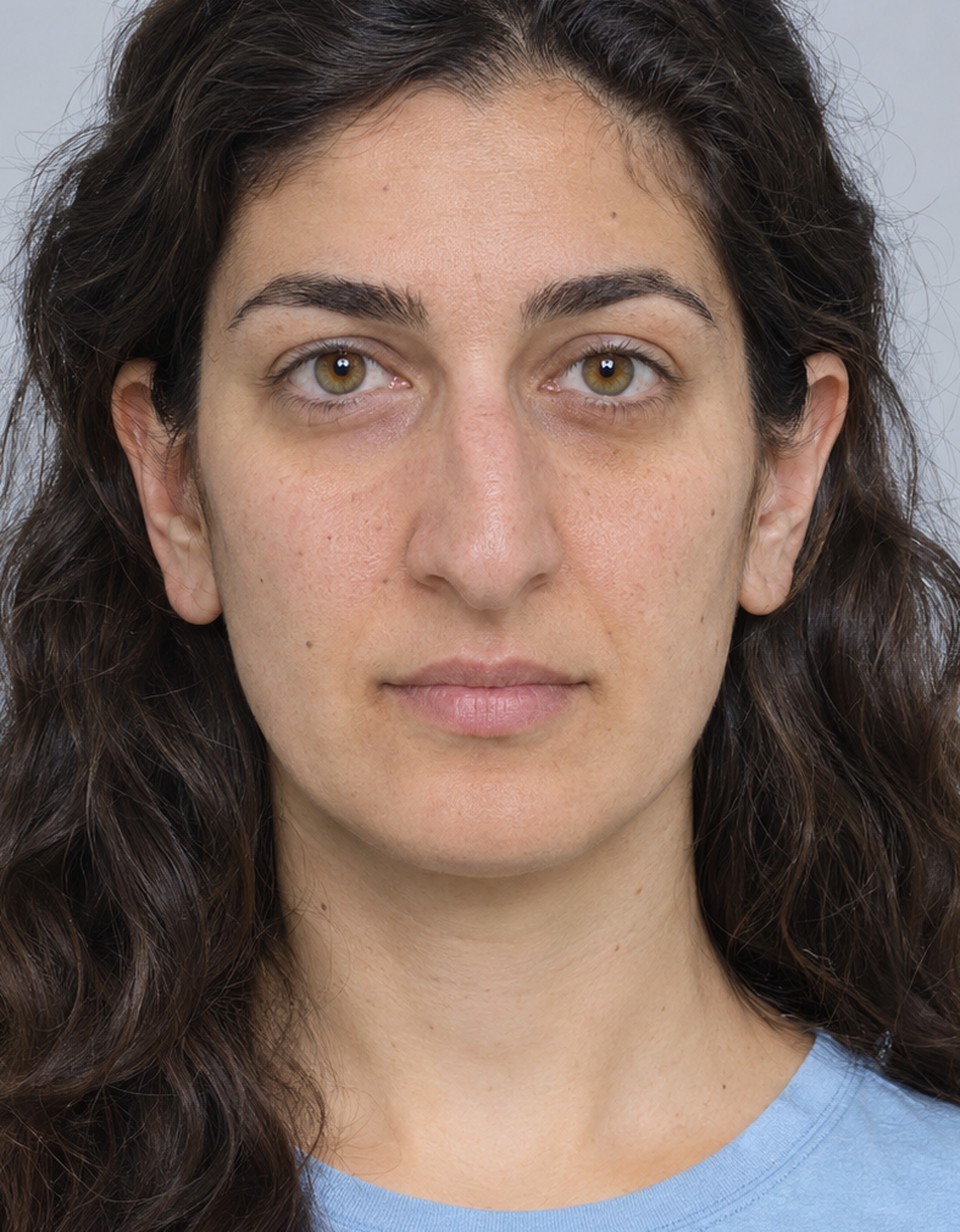
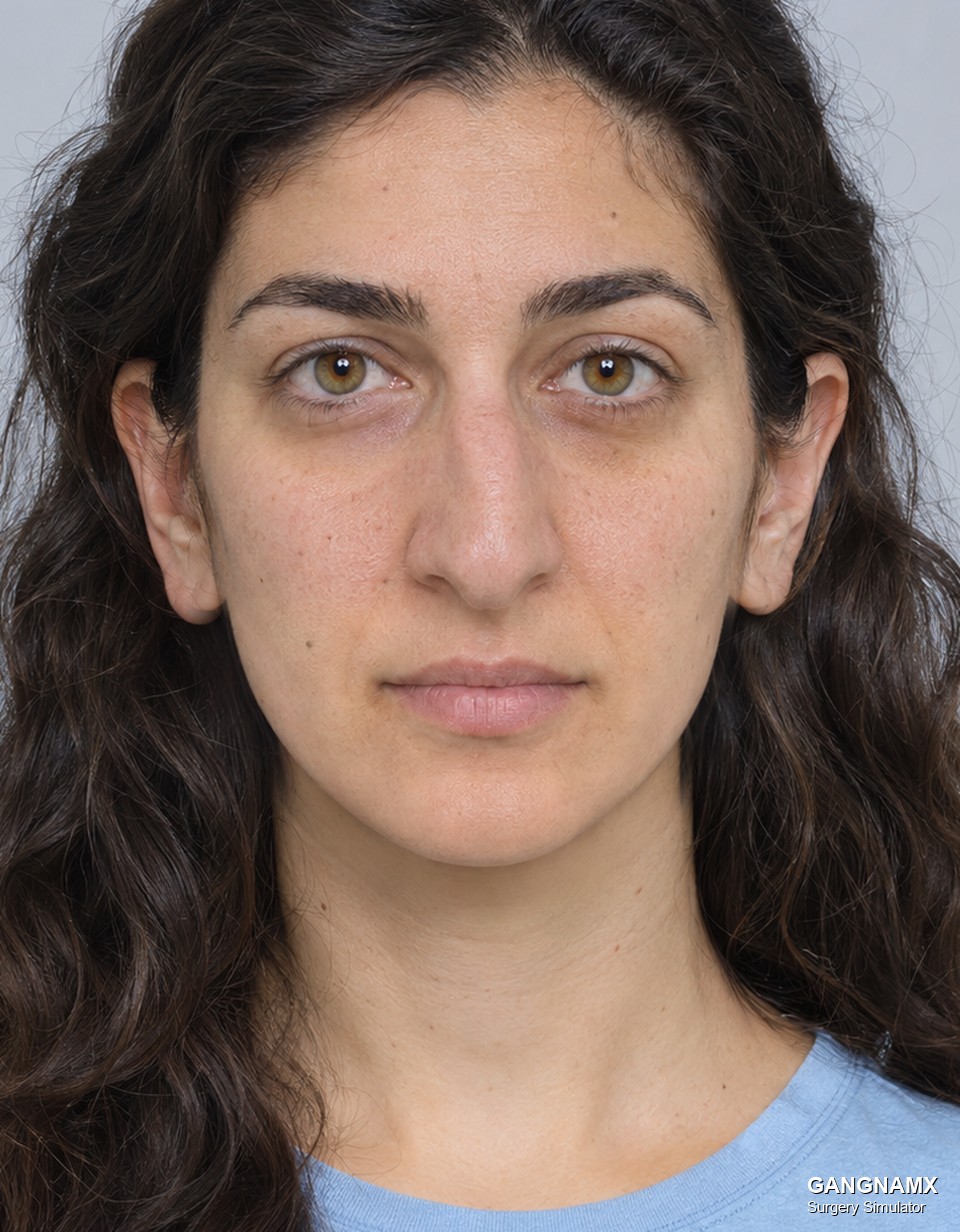
At this scale the lower face reads as clearly more tapered, with a narrower jaw and a more defined chin line. The cheeks and the eyes are unchanged, so the face stays hers. It is worth noticing that the simulation moves contour only. It cannot show how skin will behave, which is the part that is hardest to predict after weight loss.
Notes for a consultation
Skin is the unknown. When volume reduces, skin may or may not follow it. Tight, elastic skin often drapes smoothly, while looser skin may show a fold along the jaw or in the neck. A clinician can judge this by touch and by looking at the face in motion, which a photograph cannot do.
Timing matters too. Weight is often still changing, and many clinicians prefer to wait until it has settled before planning any contour change. If you are still losing, a photograph taken now is a record, not a final shape. Taking one every few weeks builds a useful timeline.
It also helps to separate what you see from what you feel. Some people see a sharper jaw and like it. Others see hollows and want volume. Writing down which of the three lines concerns you gives the clinician a better starting point than the phrase that my face looks different.
If any change is sudden, painful or accompanied by other symptoms, speak to your doctor first. Questions about the medicine, the pace of loss or your general health belong with your own physician, not with a face shape guide.
A question worth asking: is it the jaw, or the neck?
Many people who say their jawline has changed are actually looking at the neck. The jaw is a bony edge, and the neck is soft tissue hanging below it. When the angle between chin and throat is blunt, the jaw can look weak even when the bone is perfectly well shaped.
A simple test helps. Lift your chin slightly and relax your shoulders, then look at the photograph again. If the line sharpens, the issue is mostly soft tissue and posture, and it may look different from day to day. If the line stays soft at every angle, the structure itself is the better thing to discuss.
Our model shows why this matters. Her side view has a clean throat line, so the simulated jaw definition reads as a change in the edge itself. On a face with a fuller neck, the same simulation would show less, because the shadow beneath the chin would still blur the border. Knowing which of the two you have saves a great deal of confusion at a consultation.
It also explains why one photograph can mislead. Light from above deepens the shadow under the jaw, while light from the front flattens it. Taking the same view in two kinds of light shows how much of the effect belongs to the picture rather than to the face.
Closing observation
The jawline after weight loss is a mix of bone, soft tissue and skin, and it is still settling. Reading three lines on a clear photograph gives you a calm way to describe what you see. The simulation shows what a clear but natural contour change would do, and where it would leave the rest of the face alone.
Seeing your own face with a realistic adjustment is a practical way to find out which of those lines matters to you. Bring the pictures to a clinician as a starting point, and let them explain what is possible and when.
Simulation images by GangnamX.
 Plastic Surgery SimulatorDecide with your own face.Open GangnamX