Journal
The Korean nose is too high for my face: how to prevent it
How to judge bridge height on a side photo before you agree to a plan, shown on one model at two measured levels.
 Megan Fairchild
A nose that looks too high for the face is a common fear among people considering rhinoplasty in Korea. It usually means one of three things: the bridge sits higher than the forehead and eyes can support, the tip points up more than the face suggests, or the whole nose projects further than the chin balances.
None of this is about a country. It is about proportion, and proportion can be examined before any plan is signed. The most reliable tool is a side photograph and a few lines drawn on it. Our model gives a calm example, because her nose is already slim and straight.
Measuring height on a side photo
Start with a clean side view at eye height, taken straight on at ninety degrees. Draw a vertical line down from the brow through the forehead. Then see where the root of the nose, the point between the eyes, sits relative to it. A root that moves far forward of that line begins to look high.
Next, follow the bridge from the root to the tip. A straight line is a quiet profile. A bridge that rises above the straight line looks built up, and a tip that rotates sharply upward adds to the effect. Finally, check the chin. A nose that projects much further than the chin often reads as too prominent.
In the original side view, our model has a narrow bridge with a slight rise partway down and a tip that sits in balance with the lips and chin. Her nose already shows a defined line, which makes it a helpful case for discussing how much can be added before the profile stops looking like hers.
Two levels on one face
Both simulations below are changes that a surgeon could plan. The first raises the root and smooths the upper bridge, so the line from brow to tip runs straighter while the tip stays as it is. The second goes a little further, and shows what happens when the bridge is raised more noticeably along its whole length.
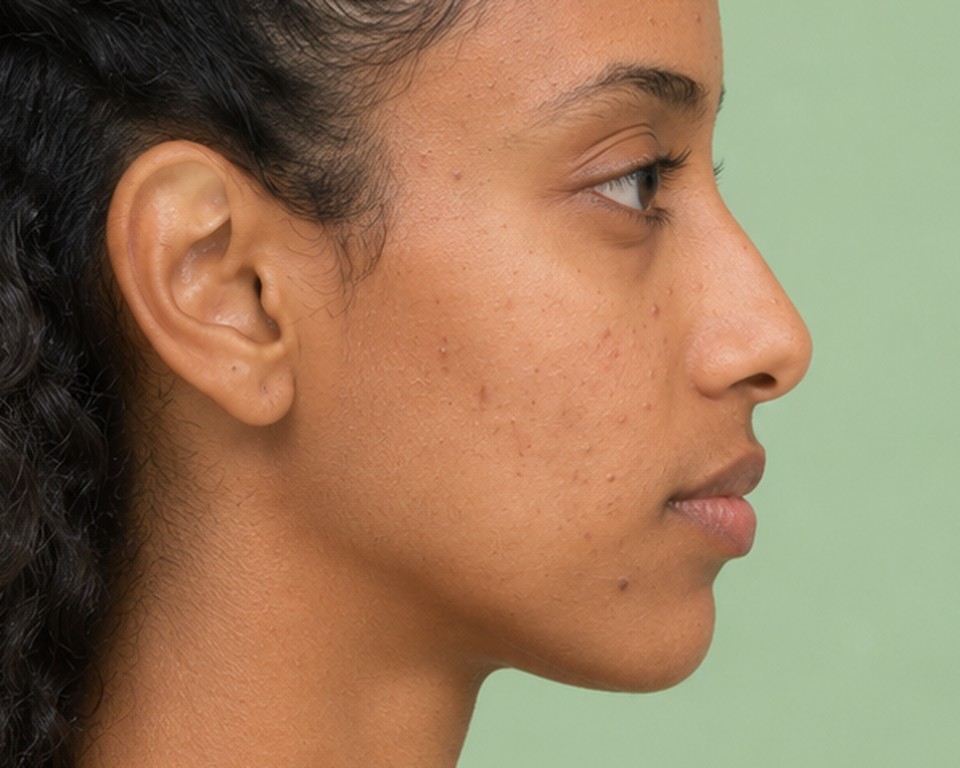
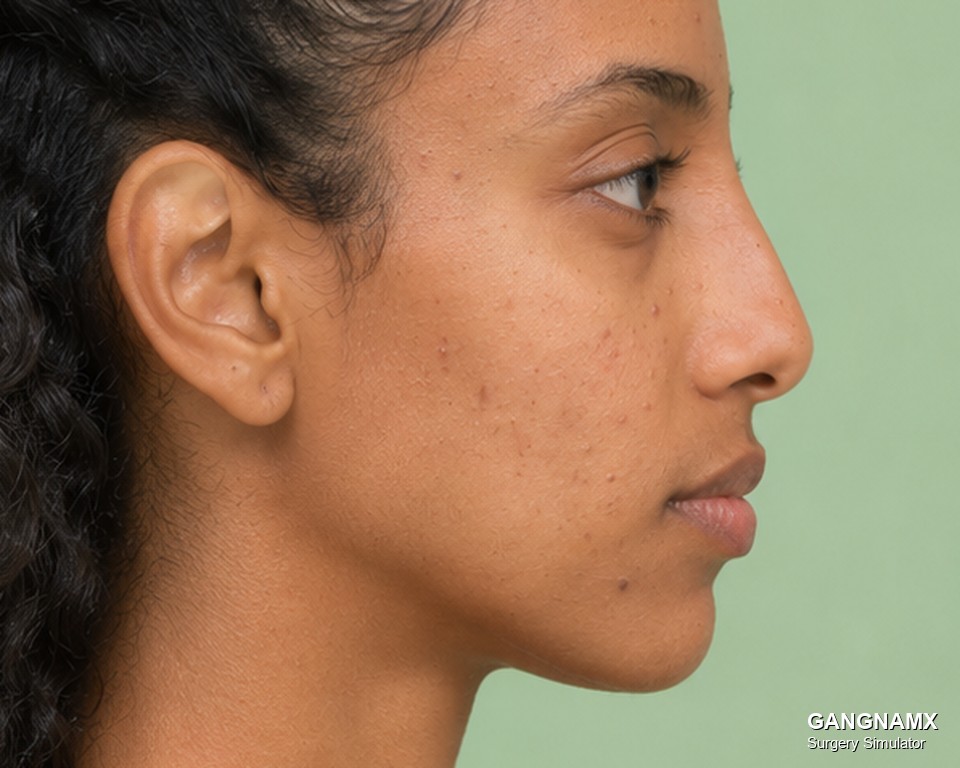
In the modest version the root sits visibly higher and the small rise in the bridge is gone, so the line from brow to tip is smoother and straighter. It is still the same person’s nose, with clearly more definition at the top. This is the kind of image to hold up against your own plan.
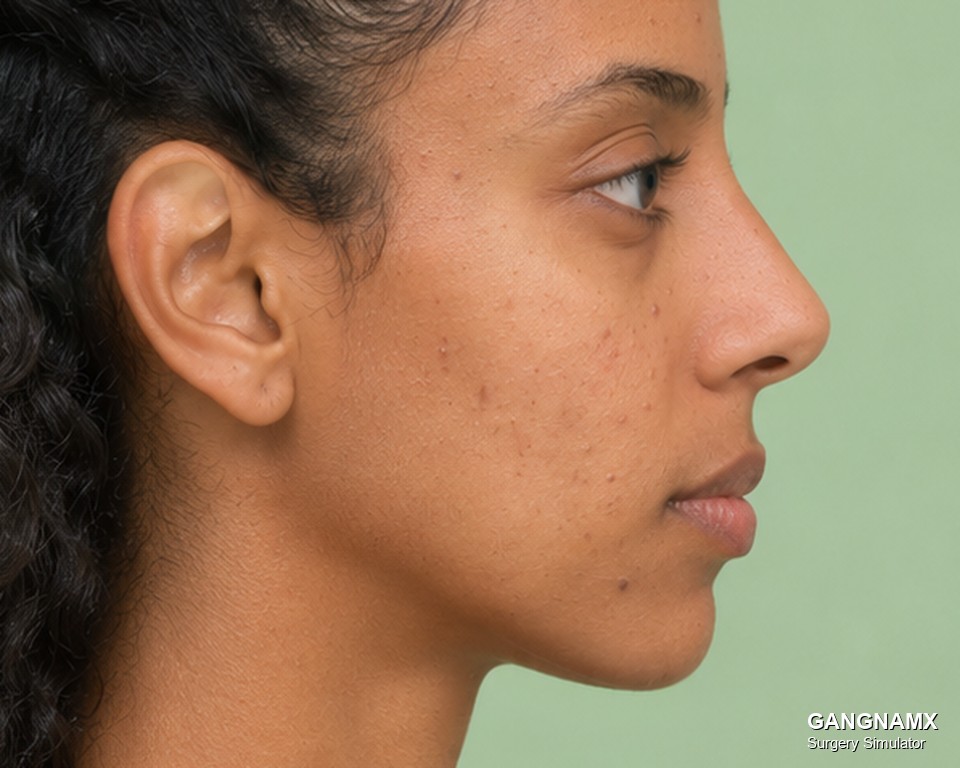
The second version is clearly more built up. The root is noticeably higher, the bridge is straighter along its whole length and the tip lifts. It is still plausible, yet the profile begins to carry more of the face. Seeing both on one person makes the point that the difference between them is small in millimetres and large in impression, and that even the first version is easy to see.
That is the answer to the question of prevention. You do not prevent a nose from being too high by avoiding a country. You prevent it by deciding your upper limit before the consultation, in a picture, and by checking the plan against that limit.
What to settle beforehand
Bring your own side photograph and mark the version you like and the version you would stop at. Ask the surgeon to show their plan on the same view, and to say how much height, in millimetres, is intended at the root and at the tip. Ask what the implant or graft material is, and how it can be adjusted later.
It also helps to speak about heritage. A nose that suits one face can be wrong on another, and a surgeon should refine what you have rather than replace it with a template. If your features include a narrow bridge, a particular width at the nostril or a certain angle that you value, say so plainly and ask that they be kept.
Try to avoid judging the result on a single swollen week. The bridge can look higher than its final height while swelling settles, and the tip can look rounder. This is another reason a clear target picture helps: it gives you something steady to compare with while the shape changes.
One more point is worth stating. A request for a higher nose and a request for a more defined nose are not the same. Some people want the line to be crisper rather than taller. Using different words for each, and showing the difference in pictures, prevents a misunderstanding that is hard to reverse afterwards.
The tip matters as much as the bridge
When people say a nose looks too high, they often mean the tip. A bridge can be raised modestly and still look natural, but a tip rotated sharply upward changes the whole character of the profile. The nostrils begin to show from the front, and the nose seems to point away from the face instead of belonging to it.
On our model, the second simulation shows this in a small way. The bridge is higher, and the tip lifts, yet the profile already looks more built up than the first version. That is why it helps to name the tip separately when you describe what you want. Ask for the bridge height and the tip rotation as two different figures.
A calm way to check is to look at the angle between the nose and the upper lip. A wider opening reads as more upturned, and a narrower one reads as more relaxed. Neither is wrong, but the face should be able to carry it. If your lips are full and your chin is strong, a modest lift usually balances. If your features are small and delicate, the same lift may feel too much.
Closing observation
The fear of a nose that is too high is really a wish to stay proportionate. A few lines on a side photograph, two clear levels and a stated upper limit are enough to protect that wish. They turn a vague worry into a specific instruction.
The sensible next step is to see what a measured change does on your own profile, and to decide where you would stop. Bring that picture to the consultation, and let the surgeon explain how close their plan comes to it.
Simulation images by GangnamX.
 Plastic Surgery SimulatorDecide with your own face.Open GangnamX